The first few weeks after I got my chimney installed, I used it wrong. Not broken, not badly installed, just wrong. I switched it on after the smoke was already filling the kitchen, ran it on the lowest speed no matter what I was cooking, and never once checked the filter until it stopped pulling smoke properly. It still worked, technically. It just worked far worse than it should have.
How you use a kitchen chimney day to day matters almost as much as which one you bought. A well-chosen chimney used carelessly will still leave smoke lingering and grease on your walls. This guide covers exactly how to use one properly, from the first switch-on to the habits that keep it running well for years.
Last updated: September 2026.
Quick Answer
- Switch it on 1-2 minutes before you start cooking, not after
- Match the fan speed to what you’re cooking, low for boiling, high for frying and tadka
- Keep kitchen windows near the stove closed while it runs, cross-drafts disrupt suction
- Let it run 5-10 minutes after you finish cooking
- Clean the filter every 2-4 weeks depending on how much you fry
Before You Use It for the First Time
A few things are worth checking before you switch on a brand-new chimney, or even one you’ve just moved into a new kitchen.
- Remove any protective plastic film. Many chimneys ship with a plastic or paper film covering the body to protect the finish during transport and installation. It needs to come off before use, left on, it can warp or discolor from the heat the unit generates.
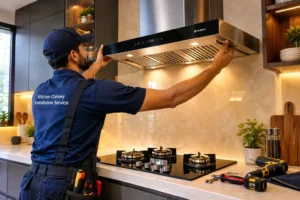
- Confirm the installation height. The standard is 65 to 75 cm above a gas stove (26 to 30 inches), and 55 to 65 cm above an electric or induction hob. Too low is a safety issue, too high and suction drops off noticeably.
- Check the filter is seated correctly. It’s easy for an installer to leave a baffle filter slightly loose. A gap here lets smoke bypass the filter entirely.
- Test all speed settings once before you actually cook. Run it for a minute on low, medium, and high with nothing on the stove, so any rattling or wiring issue shows up now, not during your first real cooking session.
How to Use a Kitchen Chimney: Step-by-Step
- Switch it on before you start cooking. Turning it on 1 to 2 minutes ahead lets suction build up before oil hits the pan, rather than trying to catch up once smoke is already spreading.
- Close nearby windows and doors. This one surprises people. A chimney works by creating a suction zone directly above the stove. A strong cross-breeze from an open window near the cooktop can pull smoke sideways, out of that zone, before the chimney catches it. Keep windows near the stove closed while cooking; a window elsewhere in the kitchen for general airflow is fine.
- Match the fan speed to the cooking method. Low speed for boiling, steaming, or simmering. Medium for regular sautéing and everyday cooking. High for deep frying, tadka, or grilling, anything that produces heavy smoke or oil vapor.
- Keep pans positioned under the hood. If your cooktop has multiple burners, cook on the burner closest to the center of the chimney’s suction zone when you’re frying or doing anything smoke-heavy, rather than the outer edge.
- Let it run for 5 to 10 minutes after you’re done cooking. Residual smoke and odor take a few minutes to fully clear, even after the flame is off. Switching off immediately leaves that last bit lingering in the kitchen.
- Wipe the exterior and check the oil tray weekly. If you have an auto-clean or filterless model, check the oil collection cup isn’t close to overflowing.
Choosing the Right Speed for What You’re Cooking
Running a chimney on high speed for everything wastes electricity and adds unnecessary noise. Running it too low for heavy cooking means smoke escapes the suction zone. Here’s a simple way to match speed to task:
| What You’re Cooking | Recommended Speed |
| Boiling, steaming, simmering | Low |
| Regular sautéing, everyday cooking | Medium |
| Tadka, tempering with mustard seeds | Medium to High |
| Deep frying, grilling, tandoor-style cooking | High |
| Multiple dishes cooking simultaneously | High |
If your model has a BLDC motor with more than three speed levels, you generally don’t need to run it at maximum unless you’re frying, a mid-level setting handles most daily cooking while staying quieter and using less power. For more on how suction ratings work, our guide on choosing an electric kitchen chimney covers this in detail.
Maintenance Routine That Actually Keeps It Working
Proper daily use only gets you so far if the filter behind it is clogged. Here’s the routine that keeps suction consistent instead of quietly dropping off over months.
Weekly
- Wipe the exterior body and control panel with a damp cloth
- Check the oil collection tray on auto-clean or filterless models
Every 2 to 4 Weeks
- Remove and wash baffle filters in warm water with dish soap, or run them through a dishwasher if they’re rated for it
- Cook daily with heavy frying? Clean every 2 weeks. Lighter, occasional cooking? Every 4 weeks is usually enough
Every 3 to 6 Months
- Replace the carbon filter if you have a ductless model (it cannot be washed, only replaced)
- Wipe down the interior chamber with a degreasing spray
Annually
- Have the motor and fan blades professionally checked, especially for filterless models where grease can reach the motor housing over time
For a deeper breakdown of filter types and which suits your cooking style, see our comparison of baffle filter vs filterless chimneys.
Common Mistakes That Quietly Reduce Performance
- Switching it on after smoke has already spread. By then it’s playing catch-up instead of capturing smoke at the source.
- Always running the lowest speed to save electricity. The extra power a higher speed uses during a 20-minute frying session is a few rupees. A kitchen full of lingering smoke and grease is not worth that saving.
- Skipping filter cleaning because suction “still seems fine.” Suction loss from a clogging filter is gradual, most people don’t notice until it’s dropped by 30 to 40 percent.
- Cooking with a window wide open right next to the stove. As covered above, this disrupts the suction pattern more than people expect.
- Switching off the moment the flame is off. That last few minutes of residual smoke and odor needs the extra runtime to clear properly.
Safety Notes Worth Knowing
Grease is flammable, and a chimney filter clogged with built-up oil sitting directly above an open flame is a real fire risk, not just a maintenance inconvenience. A few habits matter here: never skip filter cleaning schedules, empty the auto-clean oil tray before it overflows, and never leave hot oil unattended on the stove, a running chimney reduces smoke but does not prevent a pan fire. If a grease fire does start, turn off the flame, cover the pan with a metal lid to cut off oxygen, and never use water on burning oil.
Why Smoke Still Lingers Even With the Chimney On
If you’re doing everything above and smoke is still hanging around, it usually comes down to one of these:
- Undersized suction for your cooking volume. A 60 cm, 800 m³/hr chimney struggles with a 4-burner hob and daily heavy frying. Check our use of kitchen chimney guide for suction guidelines by kitchen size.
- Installed too high above the stove. Even 10-15 cm above the recommended range noticeably weakens the suction zone.
- Clogged filter. The single most common cause. Clean it before assuming anything else is wrong.
- A cross-breeze from a nearby open window or door pulling smoke away from the suction zone.
- Ducting that’s too long or has too many bends (ducted models), each additional meter and each bend reduces effective suction.
Sources & About This Guide
This guide is based on practical, everyday use of a kitchen chimney, cross-checked against installation and operating guidance from manufacturers including Faber and Glen for height and airflow specifications.
Conclusion
Using a kitchen chimney properly isn’t complicated, but it is a set of small habits: switch it on early, match the speed to what’s on the stove, keep the area around it free of cross-drafts, let it run a few minutes after cooking, and clean the filter on a schedule rather than waiting until performance visibly drops. None of this takes more than a few extra seconds per cooking session. The payoff is a kitchen that stays cleaner, air that clears faster, and a chimney that keeps performing at its rated suction for years instead of quietly losing power.
Frequently Asked Questions
1. Should I turn the chimney on before or after I start cooking?
Before. Switch it on 1 to 2 minutes ahead so suction is already established when oil hits the pan and smoke starts rising. Turning it on after smoke has spread means the chimney is playing catch-up instead of capturing it at the source.
2. Is it safe to use a kitchen chimney every day?
Yes, daily use is exactly what chimneys are built for. The important part is pairing daily use with a regular filter-cleaning schedule, otherwise grease buildup on a filter used daily accumulates faster and can become a fire risk over time.
3. Should I keep the kitchen window open or closed while using the chimney?
Keep windows near the stove closed while cooking. A chimney works by creating a suction zone directly above the cooktop, and a cross-breeze from a nearby open window can pull smoke sideways out of that zone before the chimney captures it. A window elsewhere in the kitchen, away from the stove, is fine for general ventilation.
4. What is the correct height to install a kitchen chimney?
65 to 75 cm above a gas stove (roughly 26 to 30 inches), and 55 to 65 cm above an electric or induction hob. Lower increases fire risk near the flame; higher noticeably reduces suction efficiency.
5. Which fan speed should I use for Indian cooking?
Low for boiling and steaming, medium for regular sautéing, and medium-to-high for tadka, deep frying, or grilling. Running on maximum speed for everything wastes electricity and adds unnecessary noise; matching speed to the actual smoke and oil output works better.
6. How often should I clean the chimney filter?
Every 2 to 4 weeks for baffle filters, more often (every 2 weeks) if you fry or do tadka daily, less often (every 4 weeks) for lighter, occasional cooking. Ductless carbon filters can’t be cleaned and need replacing every 3 to 6 months.
7. Do I need to remove anything from a brand-new chimney before using it?
Yes. New chimneys often ship with a protective plastic or paper film over the body to prevent scratches during transport and installation. This needs to be peeled off before first use; left on, it can warp or discolor from the heat the motor and nearby cooking generate.
8. Why does smoke still linger even with the chimney running?
The most common causes are a clogged filter, suction power that’s undersized for your kitchen and cooking style, incorrect installation height, or a cross-breeze from a nearby open window pulling smoke out of the suction zone. Check the filter first, it’s the most common culprit.
9. How long should I run the chimney after I finish cooking?
5 to 10 minutes. Residual smoke, steam, and odor take a few minutes to fully clear even after the stove is off. Switching off immediately when you finish cooking leaves that last bit lingering in the kitchen.
10. Does a kitchen chimney use a lot of electricity?
No. Most chimneys draw 150 to 250 watts (90 to 150 watts for BLDC motor models), and they typically run for 30 to 45 minutes during and after cooking rather than continuously. Running the correct speed for what you’re cooking, rather than always maxing it out, keeps consumption modest.
11. What mistakes should I avoid when using a kitchen chimney?
The biggest ones: switching it on after smoke has already spread, always running the lowest speed regardless of what’s cooking, skipping filter cleaning because suction “still seems fine,” cooking with a window wide open right next to the stove, and switching off immediately when the flame goes out instead of letting it run a few extra minutes.
12. Can a kitchen chimney work without a duct?
Yes, ductless models recirculate air through a carbon filter that absorbs odors before releasing air back into the kitchen. They work reasonably well for light to moderate cooking, but ducted systems, which vent air outside, are more effective for heavy daily Indian cooking with frying and tempering.