Choosing the best kitchen chimney brand in India is less about a single universal winner and more about matching a model to your cooking habits, kitchen layout, budget, warranty, and service availability. Frequent frying and tadka can produce smoke and grease, so look beyond brand claims to the exact model’s airflow, hood size, filtration, noise, installation requirements, and support terms.
Written by Mohammed Saqib · Updated: October 2026.
I’ve spent a lot of time researching which chimney brand is best in India, and I’ll be honest, I made a bad choice the first time. Went with a cheap, no-name brand, and within six months, the motor was humming like a ceiling fan from 1992, and the filters were practically welded shut with grease. Never again.
In this guide, I’m breaking down the top chimney brands in India, Faber, Elica, Glen, Hindware, Bosch, Kaff, and more, by suction power, filter type, auto-clean tech, noise levels, warranty, and price. Whether you’re looking for the best chimney brand for Indian cooking, the most budget-friendly option, or a premium pick for an open modular kitchen, I’ve got you covered.
Last updated: September 2026.
Which Chimney Brand is Best in India? A Quick Overview
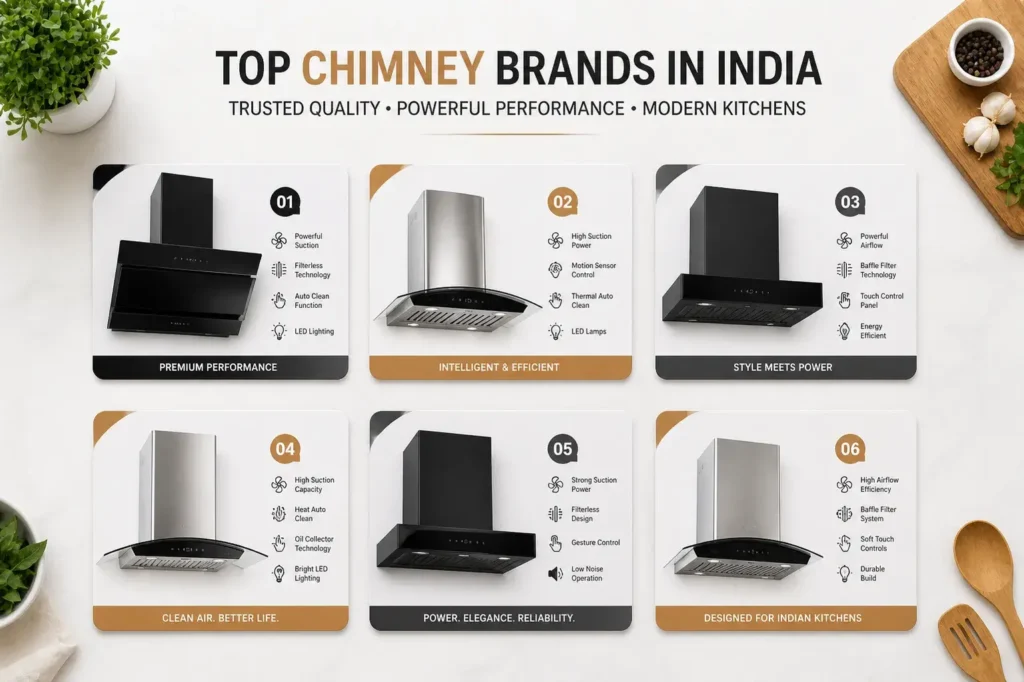
Before we go deep, here’s a bird’s-eye view of the top kitchen chimney brands in India and what they’re best known for.
| Brand | Best For | Price Range | Suction Power |
|---|---|---|---|
| Faber | Heavy Indian cooking, performance | Rs. 14,000–28,000 | 1000–1500 m³/hr |
| Elica | Modern kitchens, tech features | Rs. 10,000–28,000 | 1100–1800 m³/hr |
| Glen | Value for money, durability | Rs. 6,290–43,390 | 1200–1500 m³/hr |
| Hindware | Budget buyers | Rs. 10,000–24,000 | 1100–1350 m³/hr |
| Bosch | Premium, German engineering | Rs. 22,000–55,000 | 800–1000 m³/hr |
| Kaff | Modular kitchens | Rs. 12,000–32,000 | 1000–1300 m³/hr |
| Inalsa | Small kitchens, tight budgets | Rs. 7,000–16,000 | 950–1100 m³/hr |
| Siemens | Ultra-premium, quiet operation | Rs. 35,000–75,000 | 700–1000 m³/hr |
Faber Chimney Review: Is It the Best Kitchen Chimney Brand?
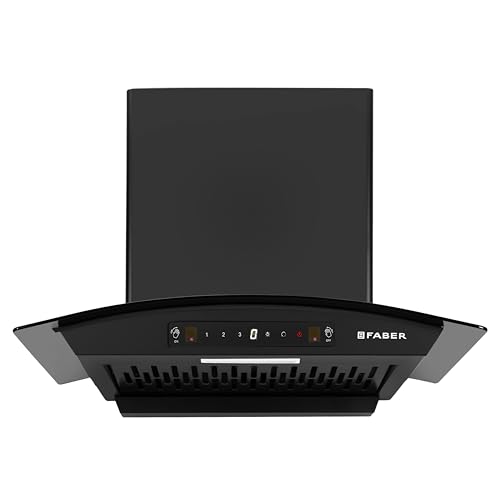
- Type: Black Curved Glass | Wall Mounted
- Size: 60cm (Suitable for 2-4 Burner Stove)
- Filter Type: Filterless| Suction Power: 1200 m³/hr
Prices on Amazon keep changing.
The Faber is the brand I keep recommending to people who cook seriously. And by seriously, I mean those who make dal tadka, fried fish, and stir-fry in the same week. Faber kitchen chimneys are built for that kind of cooking.
Quick background: Faber was founded in Italy in 1955 and entered India in the late 1990s, since then building deep manufacturing roots here rather than just importing. That’s part of why its chimneys are tuned for Indian cooking intensity rather than lighter European use.
Why Faber Stands Out
The brand has been around for decades, and its biggest selling point is powerful suction for Indian kitchens. Most Faber models in the mid-range offer 1200–1500 m³/hr of suction, which is more than enough for a standard 4-burner hob in a closed kitchen.
- Heat auto-clean technology melts grease off the inner walls automatically and collects it in an oil cup. You don’t need to scrub anything
- Triple-layer baffle filters handle oily, spice-heavy smoke better than mesh filters
- Gesture and touch controls work even with greasy hands
- Noise levels on newer models drop to under 58 dB, which is reasonable
- The Faber BLDC motor models save significant energy compared to older motor designs
Popular Faber Chimney Models and Prices
| Model | Suction | Type | Price |
|---|---|---|---|
| Faber Hood Crest Plus HC SC | 1200 m³/hr | Wall-mounted | Rs. 16,000–22,000 |
| Faber Hood Everest SC TC LTW | 1350 m³/hr | Auto-clean | Rs. 20,000–28,000 |
| Faber Hood Zenith FL SC | 1100 m³/hr | Filterless | Rs. 15,000–21,000 |
| Faber Agile 60 BLDC | 1500 m³/hr | Energy-efficient | Rs. 22,000–28,000 |
| Faber Hood Alpine | 1500 m³/hr | Slant body, filterless | Rs. 20,000–26,000 |
Faber also backs its motors with a 12-year motor warranty on select models, which is a serious differentiator. If you’re cooking heavy meals daily, Faber is arguably the best chimney brand for Indian kitchens.
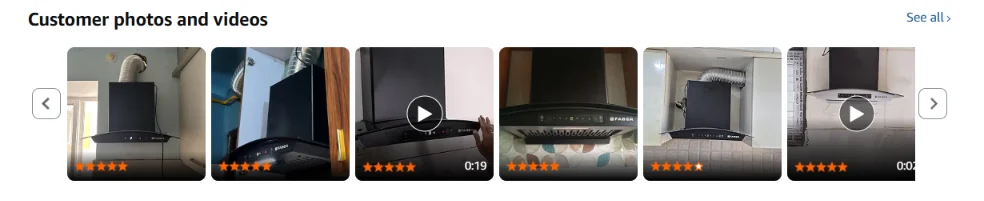
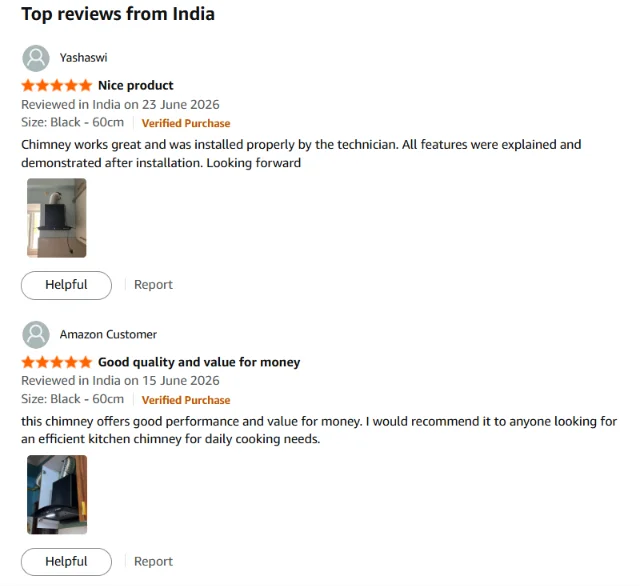
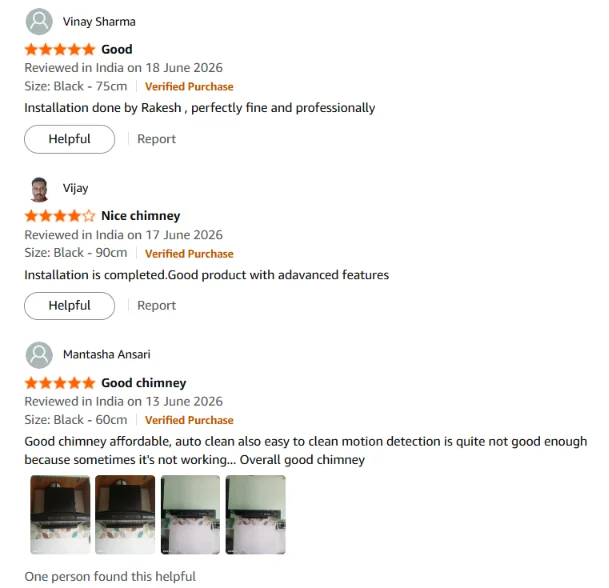
Reviews on Amazon
Pros and Cons of Faber Chimneys
| Pros | Cons |
|---|---|
| Excellent suction for Indian cooking | Some models are bulkier |
| Heat auto-clean is genuinely effective | Slightly higher cost than budget brands |
| Long motor warranty (up to 12 years) | Baffle filters need periodic cleaning |
| Wide range of sizes and mounting styles | Premium models can feel pricey |
Elica Chimney Review: Best for Modern and Tech-Forward Kitchens
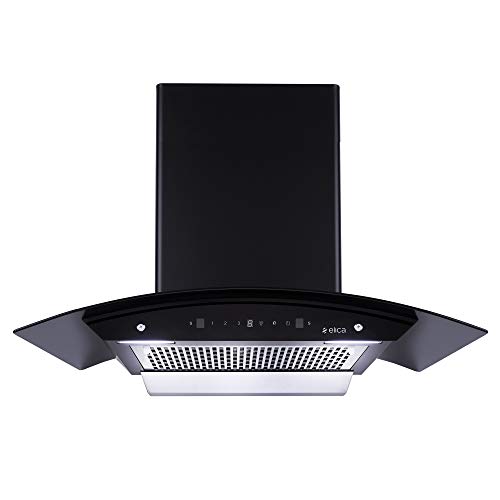
- Chimney Type: Curved Glass Chimney, Wall Mounted
- Size: 90cm (Suitable for 3-5 Burner Stove) | Annual Energy Consumption: 160 Watts | Power Requirement: 220 Volts
- Filter Type: Filterless | Auto cleaning with Oil collection tray for easy clean | Suction Power: 1350 m3/hr
Prices on Amazon keep changing.
The Elica is the brand that tends to win on looks and innovation. If your kitchen has a modular setup, white walls, and you want the chimney to look like it belongs in an interior design magazine, Elica is worth serious consideration.
Quick background: Elica is an Italian brand and one of the largest chimney makers globally, with a major manufacturing unit in India where products are co-developed specifically for Indian households rather than adapted from European designs.
What Makes Elica a Top Chimney Brand
Elica kitchen chimneys are designed with a focus on aesthetics and smart technology. They were one of the first brands in India to push filterless chimney technology, which means cleaner airflow and fewer parts to maintain.
- Suction range goes from 1100 m³/hr on entry-level models, all the way to 1600–1800 m³/hr on high-end 90cm models
- Motion sensor controls let you operate the chimney with a wave of your hand, useful when your hands are messy
- BLDC motor models consume up to 60% less electricity compared to standard induction motors
- The Elica iSmart model offers 24 different speed levels with an auto-adjusting motor that reads smoke levels in real time
- 15-year motor warranty on select models, the longest in the category
Popular Elica Chimney Models and Prices
| Model | Suction | Type | Price |
|---|---|---|---|
| Elica WDFL 606 HAC LTW MS | 1200 m³/hr | Wall-mounted | Rs. 10,000–15,000 |
| Elica WD TBF HAC 90 MS | 1425 m³/hr | Wall-mounted | Rs. 18,000–25,000 |
| Elica 90 cm FLAT FL 900 MAX HAC | 1600 m³/hr | Filterless auto-clean | Rs. 22,000–30,000 |
| Elica iSmart 60 | 2300 RPM | Inverter tech, 24 speeds | Rs. 18,000–24,000 |
| Elica Glace EDS HE LTW | 1150 m³/hr | Silent chimney | Rs. 20,000–28,000 |
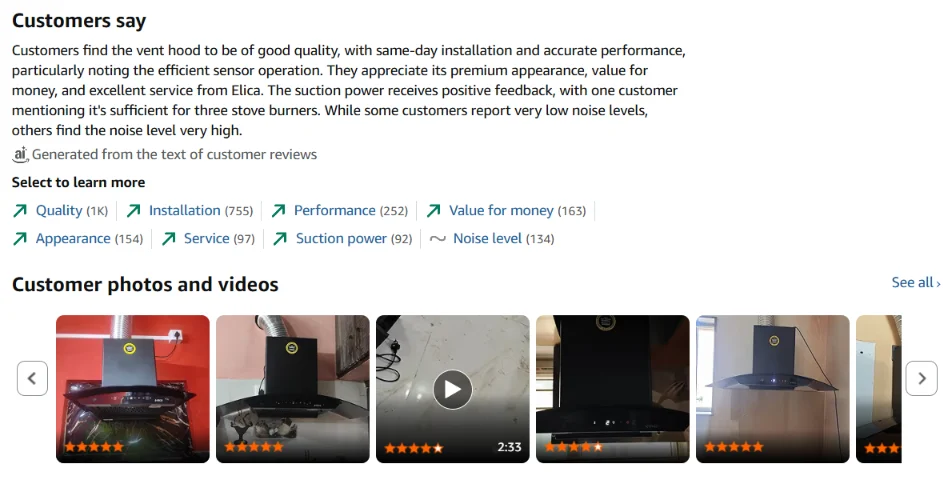
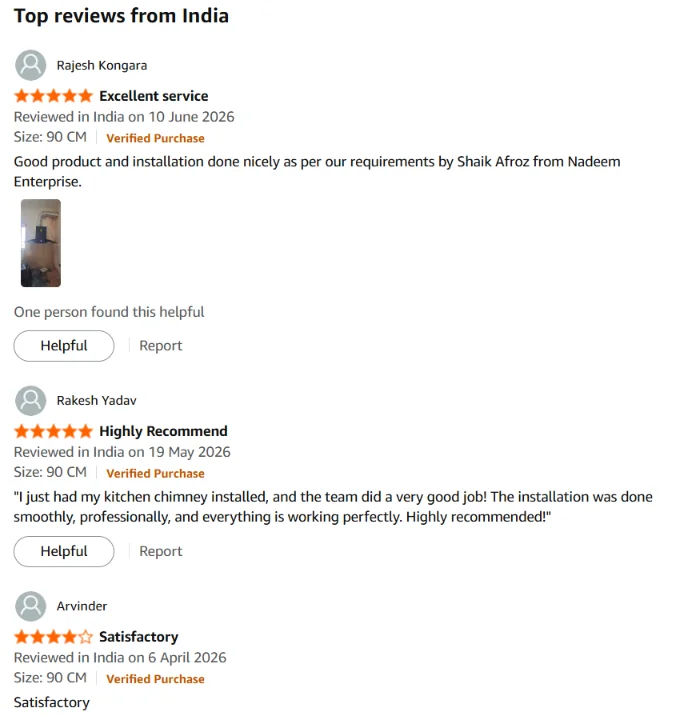
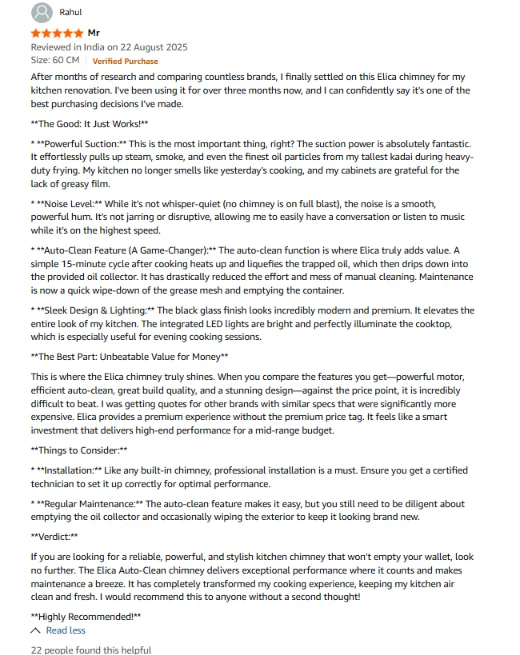
Reviews on Amazon

Pros and Cons of Elica Chimneys
| Pros | Cons |
|---|---|
| Excellent designs for modern kitchens | Higher-end models are expensive |
| Industry-leading motor warranty (15 years) | Service quality can vary by city |
| Filterless tech reduces maintenance | Entry-level models have lower suction |
| BLDC motors save energy | Curved glass can be harder to clean |
Glen Chimney Review: Best Value-for-Money Chimney Brand in India
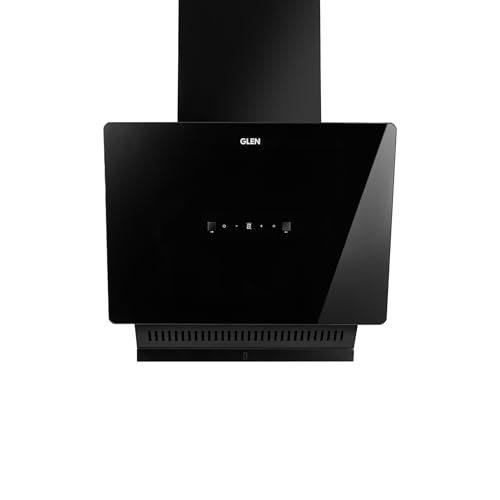
- 𝗖𝗵𝗶𝗺𝗻𝗲𝘆 𝗧𝘆𝗽𝗲: Wall-mounted Slant Chimney in elegant black finish, designed to blend seamlessly with modern kitchen inter…
- 𝗦𝗶𝘇𝗲 𝟲𝟬 𝗰𝗺: Suitable for 2–3 burner stoves; recommended 60 cm installation height between chimney bottom and stove burne…
- 𝗦𝗽𝗲𝗰𝗶𝗮𝗹 𝗙𝗲𝗮𝘁𝘂𝗿𝗲𝘀: Wide suction area for maximum coverage; Oil collector tray for hassle-free cleaning & durability | Aer…
Prices on Amazon keep changing.
The Glen is the brand that doesn’t get talked about as much as Faber or Elica, but honestly, it should. The company has been making kitchen chimneys in India since 2000, and they do something the bigger names often don’t: they design specifically for Indian cooking patterns.
Why Glen Deserves More Attention
Glen knows that your morning tadka and afternoon frying are not light-duty operations. Their chimneys are built with that in mind.
- Suction power ranges from 1200 to 1500 m³/hr across their product line
- Filterless auto-clean design on most models means less scrubbing for you
- Motion sensor and touch controls come standard on mid-range models
- Strong after-sales service network with authorized centers in most major cities
- Users consistently report steady performance even after 8–10 years of daily use
- Price range is Rs. 6,290 to Rs. 43,390, far more accessible than Bosch or Siemens
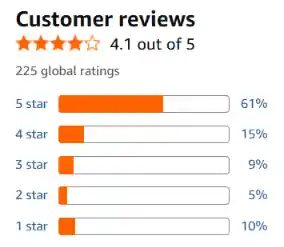
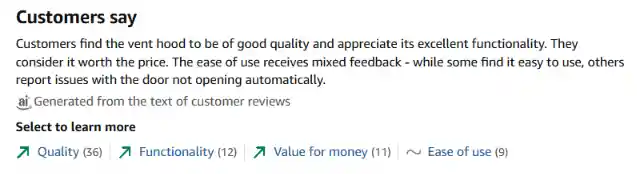
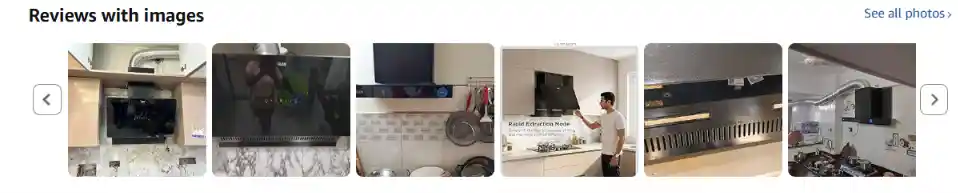
Reviews on Amazon
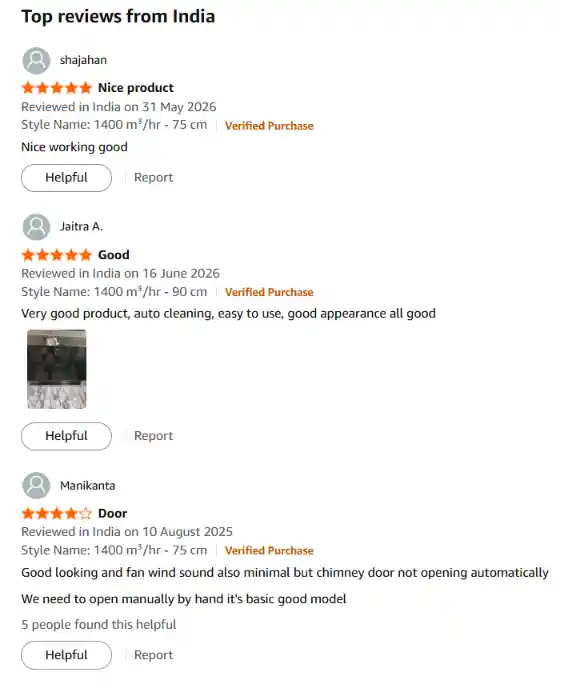
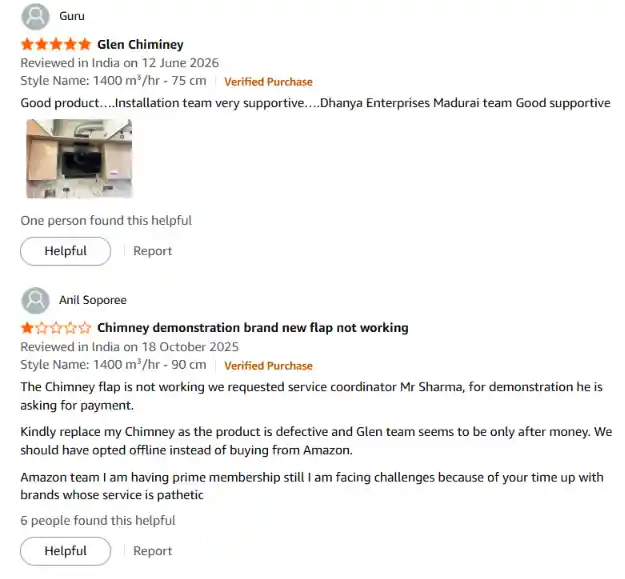
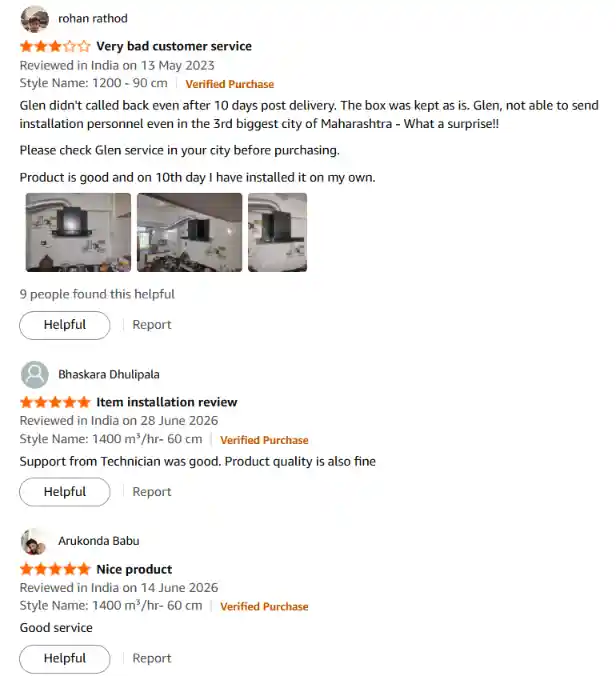
Pros and Cons of Glen Chimneys
| Pros | Cons |
|---|---|
| Designed specifically for Indian cooking | Not as premium-looking as Elica |
| Great value, performance vs. price | Fewer high-end model options |
| Strong service network | Less brand recognition internationally |
| Consistent long-term performance | Some models lack premium finishes |
Hindware Chimney Review: Best Budget Chimney Brand

- Suction Capacity: A wall mounted chimney for kitchen with powerful motor that provides 1500 m3/hr suction capacity, suit…
- Filterless Technology: There is a screen to prevent contact with motor and blower assembly to provide optimum suction
- Auto Clean Kitchen Chimney: Auto cleaning feature helps in cleaning the oil and residue formed inside the motor with jus…
Prices on Amazon keep changing.
If your budget is tight but you still want a reliable kitchen chimney for Indian cooking, Hindware is worth a look. It is one of the most accessible chimney brands in India and punches above its weight in the Rs. 10,000–18,000 range.
- Thermal auto-clean technology keeps maintenance manageable
- Suction range of 1100–1350 m³/hr suits most mid-sized kitchens
- Soft-touch control panels with LED lighting
- Available in 60 cm and 90 cm sizes
The Hindware Nevio 60 at Rs. 10,000–15,000 is a solid entry point for someone setting up a kitchen on a tight budget. It won’t wow you with features, but it does the job.
Reviews on Amazon
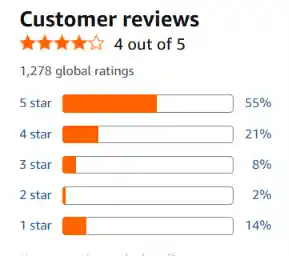
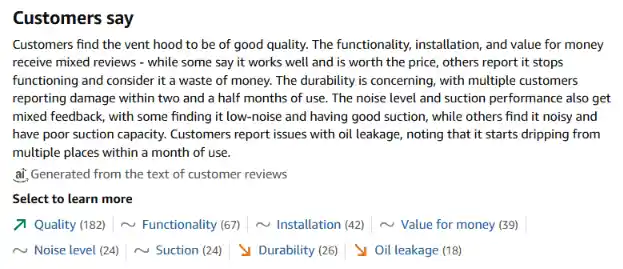
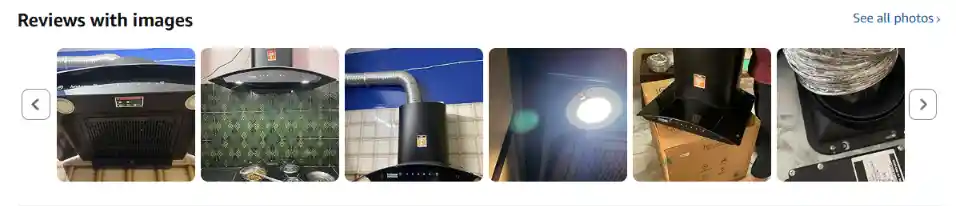
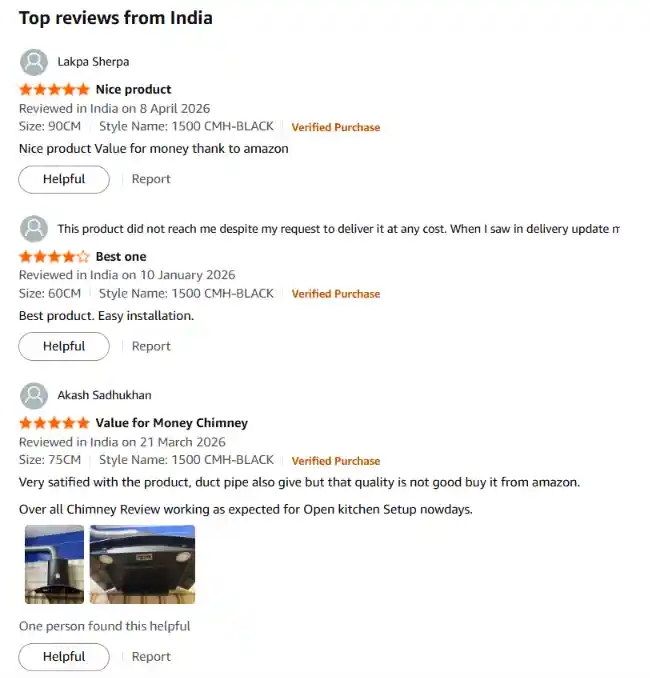
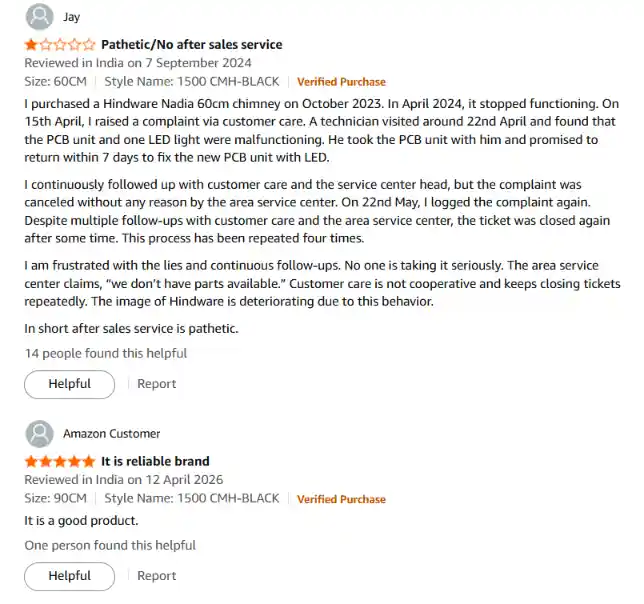

Pros and Cons of Hindware Chimneys
| Pros | Cons |
|---|---|
| Very affordable price range | Fewer premium features |
| Decent suction for everyday cooking | Build quality varies by model |
| Motor warranty is shorter than that of competitors | After-sales service is inconsistent |
| Good filter design for Indian kitchens | Motor warranty is shorter than that of competitors |
Bosch Chimney Review: Premium German Engineering for Indian Kitchens
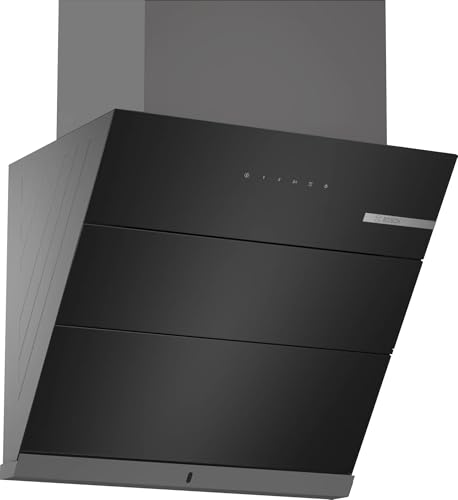
- Size:60 cm (3-4 burner stove for wall mounted chimneys)
- Extraction Capacity: Upto 950 m3/hr (For kitchen size less than 100 sqft & low frying/grilling)
- Warranty: 2 year on product
Prices on Amazon keep changing.
Bosch is the brand you buy when you want a chimney that lasts 15 years and works exactly as expected every single time. The engineering is solid, the noise levels are genuinely low, and the build quality is premium-grade.
That said, Bosch chimneys in India are priced at Rs. 22,000 to Rs. 55,000, and their suction power (800–1000 m³/hr on most models) is actually lower than that of Indian brands like Faber or Elica. This is because Bosch is designed for European cooking styles, which are generally lighter on oil and spices.
If you do moderate cooking and want a quiet, durable chimney that looks great in a premium kitchen, Bosch delivers. But if your daily cooking involves high-heat frying or heavy masala tempering, you may want to look at higher-suction Indian-market brands first.
Reviews on Amazon
No Product Reviews on Amazon for the Bosch Chimney till now
Pros and Cons of Bosch Chimneys
| Pros | Cons |
|---|---|
| German engineering, excellent build quality | Lower suction vs. Indian brands |
| Genuinely quiet operation | Expensive for what you get |
| Premium stainless steel finish | Not optimized for heavy Indian cooking |
| Easy-to-clean body | Spare parts can be costly |
Kaff, Siemens, and Inalsa: Other Brands Worth a Look
The five brands above cover most buyers, but three more show up often enough in Indian kitchens that they deserve a mention rather than being left to a single line in the overview table.
Kaff: Strong for Modular Kitchens
Kaff sits in the same price bracket as Faber and Elica, Rs. 12,000 to Rs. 32,000, with suction in the 1000 to 1300 m³/hr range. Where it stands out is in island and ceiling-mounted models built specifically for open, modular kitchen layouts, its LUX EVO 90 island chimney is a genuinely solid mid-range option if a standard wall-mounted unit doesn’t fit your layout. Service coverage is decent in major cities but thinner than Faber or Glen in smaller towns, so check locally before buying.
Siemens: Ultra-Premium and Quiet
Siemens plays in the same space as Bosch, premium German engineering, excellent build quality, and genuinely quiet operation, at Rs. 35,000 to Rs. 75,000. Suction (700-1000 m³/hr) is on the lower side for heavy Indian frying, similar to Bosch’s trade-off. This is the brand to consider if noise and finish matter more to you than raw suction, and your cooking leans moderate rather than daily deep frying.
Inalsa: Budget Pick for Small Kitchens
Inalsa is the most budget-friendly name on this list, Rs. 7,000 to Rs. 16,000, with suction around 950 to 1100 m³/hr. It won’t match Faber or Glen on long-term motor warranty or auto-clean sophistication, but for a small kitchen with light to moderate cooking and a tight budget, it is a genuinely functional choice rather than a compromise you’ll regret.
After-Sales Service: The Factor Most Buyers Discover Too Late
Suction numbers and auto-clean features get all the attention in chimney shopping, but service network and spare parts availability are what actually determine your experience three years in, when something eventually needs a repair.
| Brand | Service Network Strength | Spare Parts Availability |
| Faber | Wide, strong in Tier 2/3 cities | Easy to find |
| Glen | Wide, well established since 2000 | Generally easy |
| Elica | Wide in metros, thinner in smaller towns | Easy in major cities |
| Hindware | Decent but inconsistent by region | Moderate |
| Kaff | Decent in metros, thinner elsewhere | Moderate |
| Bosch/Siemens | Solid in metros, patchy in smaller towns | Can be costly, slower |
Before you fall for a spec sheet, search “[brand name] service center [your city]” and confirm one actually exists near you. This five-minute check has saved more than one friend of mine from a frustrating repair experience.
How to Choose the Best Chimney Brand for Your Home
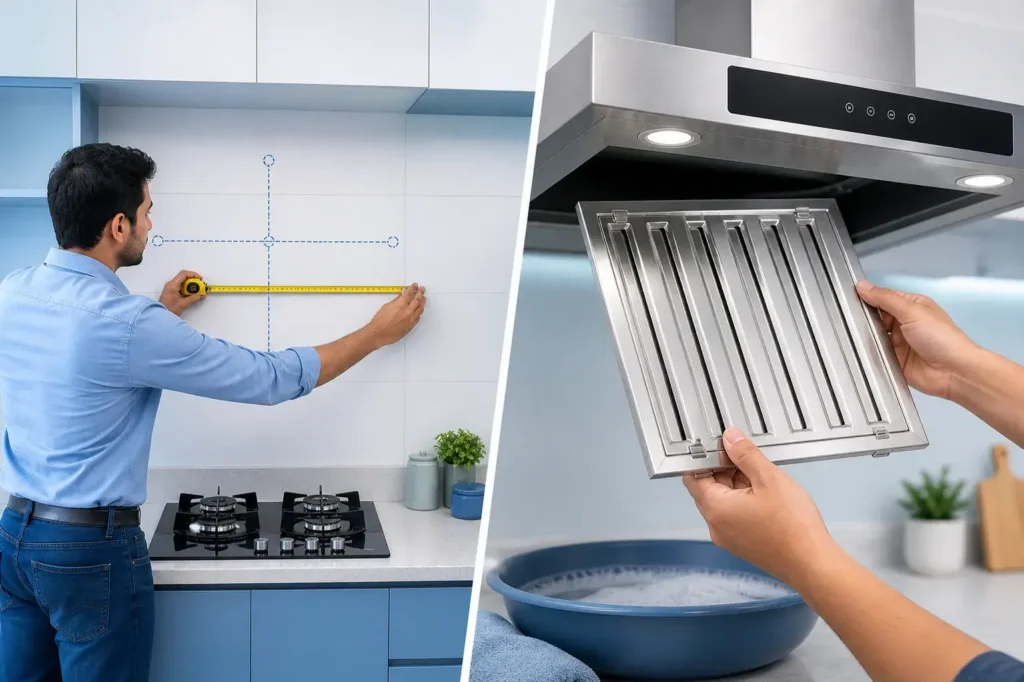
Now that we’ve covered the brands, here’s how to actually make the decision. These are the things I wish someone had told me before my first chimney purchase.
1. Calculate the Right Suction Power
Use this formula: Kitchen Length × Width × Height × 10 = Minimum suction needed (m³/hr)
For a kitchen that is 3m × 3m × 2.8m: 3 × 3 × 2.8 × 10 = 252 m³/hr minimum. But always go higher, at least 1000–1200 m³/hr for Indian cooking. If you fry daily or use a lot of spices, go 1200–1500 m³/hr.
2. Pick the Right Filter Type
- Baffle filters: Best for heavy Indian cooking. Durable, never needs replacement, just needs cleaning every 2–3 months
- Filterless (mesh-free): Easiest to maintain, good airflow, ideal for moderate to heavy cooking
- Mesh filters: Avoid these for Indian kitchens. They clog fast and are a pain to clean
3. Check the Chimney Size vs. Your Hob Size
- 60 cm chimney: For a 2 or 3-burner hob in a small kitchen
- 90 cm chimney: For a 4-burner hob or larger; standard for most Indian households
- The chimney should be at least as wide as your hob, ideally wider
4. Ducted vs. Ductless
Always go ducted if possible. Ducted chimneys push smoke and grease outside your home. Ductless chimneys recirculate air through a carbon filter and push it back into the kitchen, far less effective for heavy Indian cooking.
5. Auto-Clean vs. Manual Cleaning
Auto-clean technology (heat-based or thermal) is worth paying for. It saves you the quarterly deep-clean that nobody enjoys. Most mid-range models from Faber, Elica, Glen, and Hindware now include it.
6. Verify After-Sales Service in Your City
This is the step most people skip. Before buying any chimney, check if the brand has an authorized service center in your city. Faber, Elica, Hindware, and Glen all maintain wide service networks across India. Bosch and Siemens are solid, but service availability in smaller towns can be patchy.
Faber vs Elica Which is Better?
This is the most common question I get asked. Here’s the straight answer:
Choose Faber if: You cook heavy Indian food daily, lots of frying, deep frying, and tempering. Faber’s heat auto-clean and triple-layer baffle filters handle oily smoke better. Their motors come with up to a 12-year warranty.
Choose Elica if: You want modern design, smart features like 24-speed inverter control, motion sensors, and a 15-year motor warranty. Elica’s BLDC models are more energy-efficient and quieter.
Both are excellent. The decision really comes down to cooking style and kitchen aesthetics.
Faber vs Bosch Which Chimney is Better for Indian Kitchens?
Faber wins for Indian cooking. Faber’s suction power (1200–1500 m³/hr) is significantly higher than Bosch (800–1000 m³/hr), and it costs considerably less. Bosch is built for lighter European-style cooking.
If you cook Indian food every day, Faber is the better, more practical choice. Bosch makes more sense if you want German build quality, cook lightly, and have a premium budget.
Faber vs Glen: Which is Better for Indian Kitchens?
Both are strong performers for Indian cooking. Faber edges ahead on auto-clean technology and brand recognition, while Glen delivers better value for money, similar suction, and features at a lower price point. Glen also has a solid service network and a proven track record for long-term durability.
If budget is a concern, Glen is the smarter pick. If you want more premium finishes and wider model availability, Faber is worth the extra spend.
Best Chimney for Open Kitchen: What to Look For

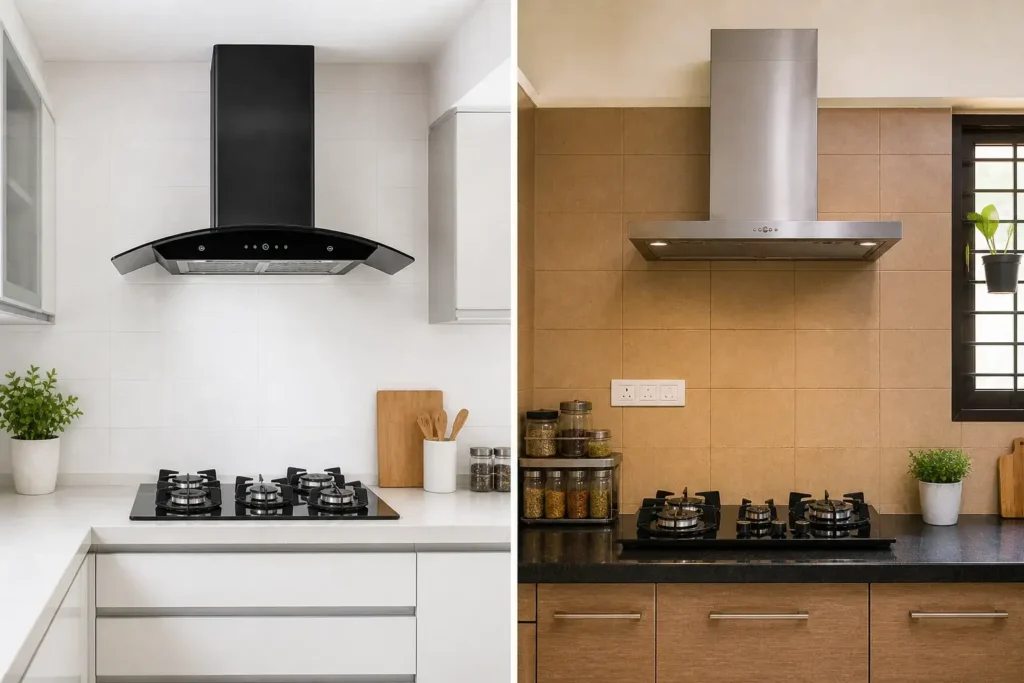
Open kitchens need island chimneys or ceiling-mounted chimneys because there’s no wall to mount a standard hood chimney against. Look for:
- Suction power of at least 1200–1500 m³/hr: open kitchens lose smoke in all directions
- Island chimney designs: Siemens, Bosch, Elica, and Kaff all offer island chimneys
- Noise level below 60 dB: open kitchens mean noise travels to living areas
- Ducted installation: mandatory for open kitchens where smoke can spread to furniture and fabrics
For open kitchens on a budget, the Kaff LUX EVO 90 Island Chimney (Rs. 25,000–32,000) is worth considering. For premium setups, the Siemens island range (Rs. 55,000+) is outstanding.
What is the 7 Times Rule for Chimneys?
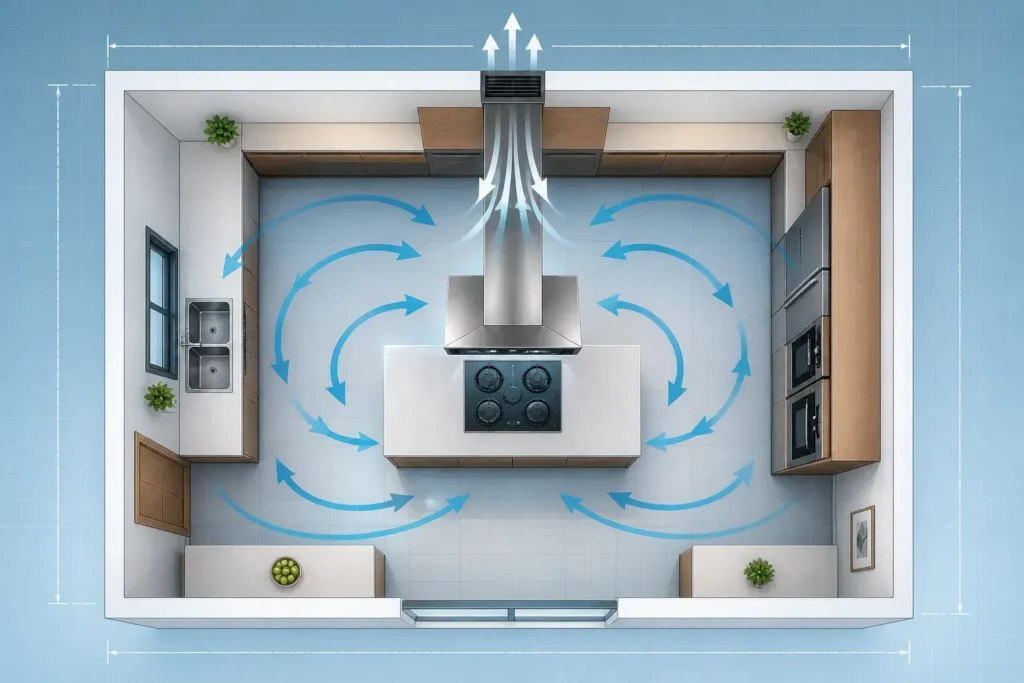
The 7 times rule states that your chimney should be able to turn over the air in your kitchen at least 7 times per hour to keep it clean and smoke-free. Here’s how to calculate it:
Minimum Suction = Kitchen Volume (m³) × 7
For example, a 4m × 3m × 2.8m kitchen has a volume of 33.6 m³. Multiply by 7 and you get 235 m³/hr minimum suction, but for Indian cooking, always add a buffer and aim for at least 1000–1200 m³/hr.
Some guides use 10 as the multiplier for Indian kitchens specifically because of the heavy smoke generated by high-heat cooking. The higher the multiple, the better for active Indian kitchens.
How to Know if a Chimney is Working Well
A chimney is doing its job if:
- Smoke clears within 30–60 seconds of heavy cooking
- No oil stains are building up on the walls or cabinets above the hob
- Noise is a consistent change in sound that often signals a clogged filter
- The oil cup (in auto-clean models) fills with collected grease over 3–4 months
- The air in the kitchen feels fresh within a few minutes of switching it on
If smoke lingers for more than a minute, you either have insufficient suction, a clogged filter, or a motor issue.
FAQs: People Also Ask
1. Which company chimneys are best?
For Indian kitchens, Faber and Elica are consistently the top two chimney brands. Faber is best for heavy-duty cooking with powerful suction and strong auto-clean tech. Elica is best for modern kitchens where design and smart features (like 24-speed BLDC motors and motion sensors) matter. Glen is the best option if you want solid Indian-cooking performance at a lower price point. For premium builds, Bosch and Siemens are top choices.
2. Which is better, Faber or Elica?
Both are excellent. Faber is better for heavy Indian cooking, think daily frying, strong tempering, and high-heat cooking, because of its powerful suction, heat auto-clean, and baffle filter design. Elica is better for modern kitchen aesthetics, smart features like inverter technology with 24 speed levels, and energy efficiency through BLDC motors that save up to 60% power. Elica also offers a longer motor warranty (up to 15 years vs. Faber’s 12 years on select models).
3. Which chimney is better, Faber or Bosch?
Faber is the better choice for Indian kitchens. Faber offers suction of 1200–1500 m³/hr at Rs. 16,000–28,000, while Bosch models typically offer 800–1000 m³/hr at Rs. 22,000–55,000. Bosch is engineered for European cooking styles, which are lighter on oil and smoke. For Indian cooking, the higher suction and auto-clean features of Faber make it more practical. Bosch wins on build quality and silent operation if those are your top priorities.
4. Is Faber brand chimney good or bad?
Faber is one of the best chimney brands in India, genuinely good. It has been in the market for decades and is particularly well-suited for Indian kitchens because of high suction power, heat auto-clean technology, durable baffle filters, and a 12-year motor warranty on select models. It is manufactured at a facility in Pune and uses components built for long-term use. The only real downsides are that some models are bulkier and slightly more expensive than budget alternatives.
5. How to select a good chimney?
Here’s a straightforward checklist:
- Suction power: Minimum 1000 m³/hr for Indian cooking; 1200–1500 m³/hr for heavy daily use
- Filter type: Baffle or filterless, avoid mesh filters for Indian kitchens
- Size: 60 cm for small hobs (2–3 burners), 90 cm for standard 4-burner hobs
- Installation: Ducted is always better than ductless for Indian cooking
- Auto-clean: Worth paying for, saves significant maintenance effort
- Warranty: Look for a motor warranty of at least 5–7 years, ideally 10–15 years
- Service network: Check if the brand has service centers in your city before buying
6. Which chimney is better, Faber or Glen in India?
Faber is better on features and auto-clean tech. Glen is better on value for money. Both are designed with Indian cooking in mind and offer suction in the 1200–1500 m³/hr range. Glen’s price range starts lower (Rs. 6,290) and delivers comparable performance to mid-range Faber models. Faber has a larger range and better brand recognition, but Glen’s long-term durability and service network are genuinely strong. If budget is a factor, go with Glen.
7. Which chimney is best for an open kitchen?
For open kitchens, you need an island chimney or ceiling-mounted chimney since there’s no wall to fix a standard hood chimney against. The best options are:
- Elica island models (Rs. 20,000–35,000): stylish and powerful
- Siemens island chimneys (Rs. 55,000–75,000): ultra-premium with low noise
- Bosch island chimney DIB098E50I (Rs. 40,000–55,000): excellent build quality
- Kaff LUX EVO 90 (Rs. 25,000–32,000): solid mid-range island option
Look for suction of at least 1200 m³/hr and noise below 60 dB for open kitchens.
8. Is Glen a good brand?
Yes, Glen is a genuinely good chimney brand, especially for Indian buyers on a mid-range budget. Glen has been manufacturing appliances in India since 2000 and designs specifically for Indian cooking habits. Their chimneys offer 1200–1500 m³/hr suction, filterless auto-clean technology, motion sensor controls, and a reliable after-sales service network. Users report strong performance even after 8–10 years of daily use. The price range (Rs. 6,290–43,390) is very accessible.
9. Is Elica a good brand of chimney?
Elica is one of the best chimney brands available in India. It is an Italian brand with a strong presence in India, known for stylish modern designs and smart technology. Their filterless chimneys reduce maintenance, their BLDC motors are energy-efficient, and their 15-year motor warranty is the best in the category. The Elica iSmart series with 24-speed inverter tech and auto-adjusting suction is particularly impressive for daily cooking. If you want a premium, tech-forward chimney that also looks great, Elica is an excellent choice.
10. Which chimney is better, curved or flat?
Both work well; it comes down to kitchen design and cooking habits:
- Curved glass chimneys: Offer a modern, stylish look and are great for wall-mounted setups in contemporary kitchens. Slightly harder to clean the glass panel. Good for moderate Indian cooking.
- Flat/wall-mounted chimneys: More powerful airflow, easier to clean, and better suited for heavy Indian cooking with high suction requirements. Less decorative but more functional.
For heavy daily cooking, flat chimneys with baffle or filterless designs are the practical choice. For a stylish modular kitchen with moderate cooking, curved glass chimneys look great and perform well.
11. What is the 7 times rule for chimneys?
The 7 times rule means your chimney should be capable of circulating your kitchen’s total air volume at least 7 times per hour. To calculate: multiply your kitchen’s length × width × height × 7. The result is the minimum suction power you need in m³/hr. For Indian cooking specifically, many experts recommend using a multiplier of 10 instead of 7, because of higher smoke and grease output from high-heat frying and tempering. So, for a 30 m³ kitchen, aim for at least 300 m³/hr at minimum, but realistically, no Indian kitchen chimney should go below 1000 m³/hr.
12. How to know if a chimney is good?
A good chimney should:
- Clear visible smoke within 30–60 seconds of heavy cooking
- Operate at under 58–65 dB for comfortable everyday use
- Have a motor warranty of at least 7 years from a reputable brand
- Use baffle filters or filterless technology (not mesh) for Indian cooking
- Come from a brand with verified after-sales service in your region
- Show no oil buildup on walls or cabinets after months of regular cooking
- Have an auto-clean function that actually works, and check for an oil collection cup
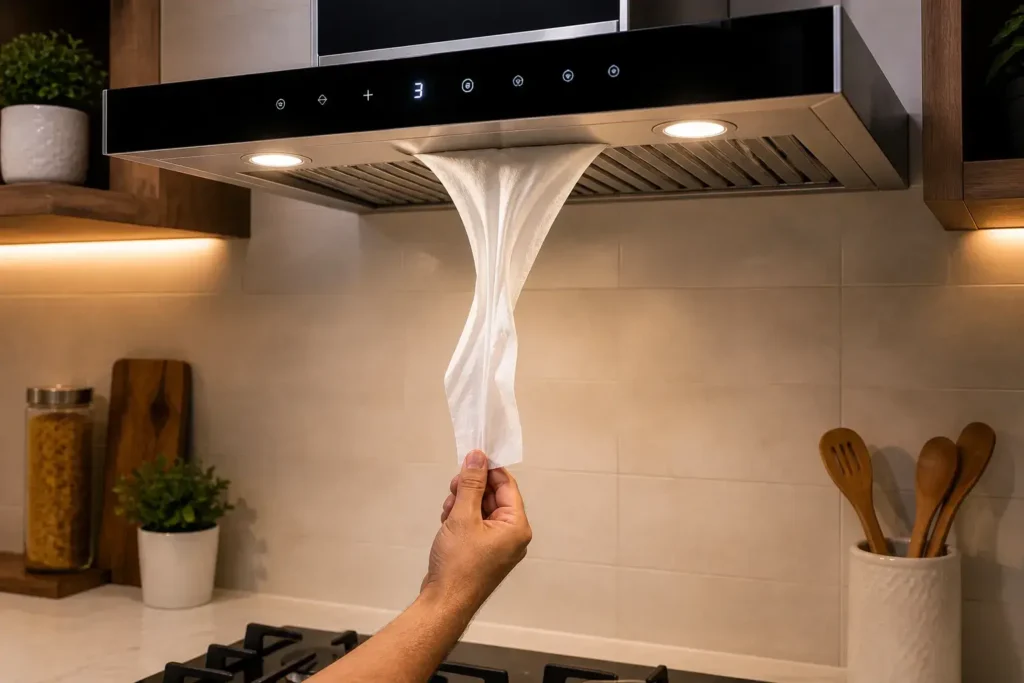
You can test a chimney’s effectiveness with a simple paper test: hold a tissue paper under the hood while it’s running at full speed. If it holds the paper firmly, the suction is strong enough.
Quick Decision: 3 Questions to Pick Your Brand
- What matters most, suction or design? Heavy daily frying and tadka → Faber or Glen. Modern look and smart features → Elica.
- What’s your budget ceiling? Under Rs. 18,000 → Hindware, Glen, or Inalsa. Rs. 18,000-30,000 → Faber, Elica, or Kaff. Above Rs. 35,000 and cooking is moderate → Bosch or Siemens.
- Is there a service center for that brand in your city? If not, drop it from your shortlist regardless of specs, this matters more than any feature once the chimney is a few years old.
Two of three answers pointing to the same brand is a strong enough signal to stop researching and buy.
Sources & About This Guide
Suction, price, and warranty figures are cross-checked against current manufacturer listings for each brand. Brand origin details are drawn from each company’s own history. Pricing reflects the Indian market as of September 2026 and shifts with festive sales and model updates.
Conclusion: Which Chimney Brand is Best in India?
So, which chimney brand is best in India? Here’s the honest summary:
- Worth comparing for a broad model range: Faber: compare each model’s rated airflow, filter design, warranty terms, and local service coverage.
- Worth comparing for modern controls: Elica: selected models may offer BLDC motors or advanced controls; check the exact model’s features, energy use, and warranty.
- Worth comparing on budget: Glen: compare model price, filter design, warranty, and service availability in your area.
- Worth comparing for budget options: Hindware: confirm current price, included features, airflow rating, and warranty for the exact model.
- Premium models to compare: Bosch or Siemens: evaluate noise ratings, availability, warranty, and service support for the specific model in your market.
My shortlist would depend on the household: compare Faber models for features and support, Elica models if the design and controls suit your preferences, and Glen models when upfront budget is a major factor. No brand or model can be guaranteed to last a fixed number of years; service life depends on usage, maintenance, parts availability, and repair needs.
Don’t rush this purchase. Measure your kitchen, check your cooking habits, and verify the service center nearest to you before you decide. A good kitchen chimney is a long-term investment, and the right brand makes all the difference.